Taste Modification Facts: What Miracle Berry Actually Changes (And What It Doesn''t)
Miracle berry doesn''t add sugar or alter food. It changes your taste receptors temporarily. Get the real taste modification facts here.
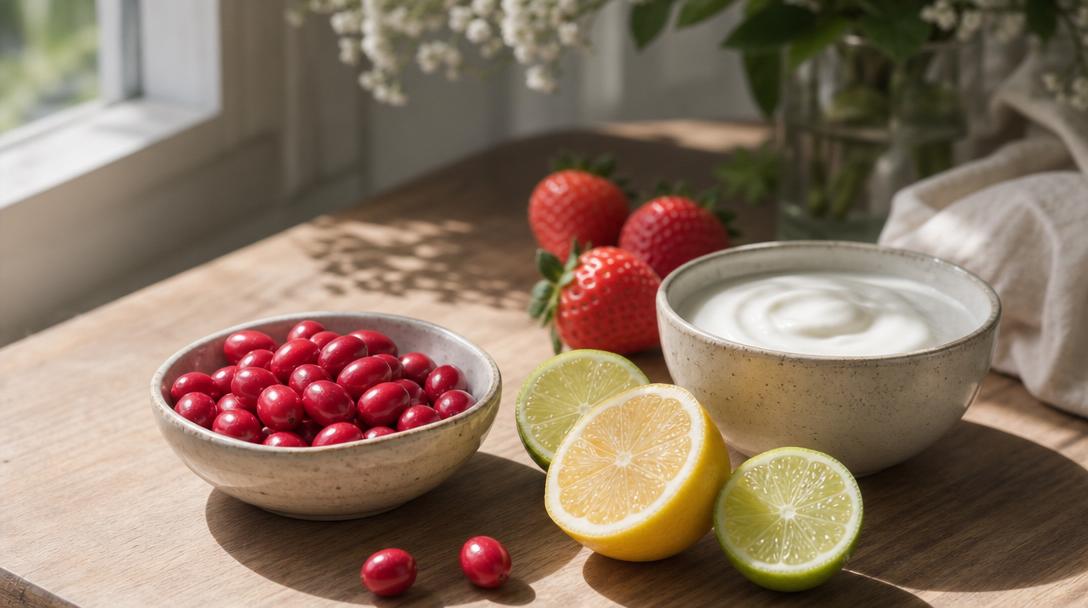
If you've ever watched someone bite into a lemon and grin like it's candy, you've witnessed the miracle berry effect firsthand. It's genuinely surprising — almost hard to believe. And because it seems so impossible, a lot of people walk away with the wrong idea about what's actually happening. Some assume the berry must be loaded with sugar. Others think it permanently rewires your sense of taste. A few even wonder if the food itself is somehow being chemically transformed. None of that is true. Understanding the real taste modification facts behind miracle berry not only clears up the confusion — it makes the whole experience even more interesting.
The Food Doesn't Change. At All.
This is the most important point, and it's worth saying clearly: when you use a miracle berry tablet, dried miracle berry, or miracle berry powder before eating something sour, the food itself is completely unaffected. A lemon is still a lemon. Its citric acid content, its nutritional profile, its calories, its pH — all of it stays exactly the same.
No sugar is being added to your food. No chemical reaction is taking place on your plate. The berry doesn't neutralize acids, coat your food with sweetness, or alter the molecular structure of anything you eat. If you were to test a lemon before and after someone consumed a miracle berry, the lab results would be identical. The food is simply not part of the equation.
This matters because people sometimes assume miracle berry is a kind of flavor additive — something that mixes with your food and changes its composition. It isn't. The action happens entirely inside your mouth, at the level of your taste receptors.
So What Does Actually Change?
The active compound in miracle berry is a glycoprotein called miraculin. When you eat a miracle berry — in any form, whether that's a tablet, dried berry, or powder — miraculin binds to the sweet taste receptors on your tongue. Under normal, neutral pH conditions, miraculin sits there quietly without triggering much of a response.
But when you eat something acidic, the drop in pH activates those miraculin-bound receptors. Your sweet receptors fire as if you had just eaten something genuinely sweet — even though you haven't. The sourness of the food is still there in a muted way for many people, but the dominant signal your brain receives is sweetness.
The result? A lemon tastes like lemonade. Vinegar takes on a mild, almost fruity edge. Plain yogurt tastes like it's been sweetened. The taste perception has shifted dramatically, but the food is chemically identical to what it was before.
This is one of the most fascinating aspects of taste modification: your experience of flavor is not a direct readout of what's in the food. It's a constructed perception built from signals your taste receptors send to your brain. Miracle berry temporarily changes those signals without touching the food at all.
It's Temporary — Not a Permanent Rewiring
Another common misconception is that regular use of miracle berry will permanently alter your sense of taste, or that you'll lose your ability to taste sourness over time. This is not how it works.
The effect of miraculin is temporary. Once the protein is washed away by saliva and normal oral pH is restored — typically within 30 minutes to about an hour, depending on the person and what they eat — taste perception returns completely to baseline. Sour things taste sour again. Sweet things taste as sweet as they always did. Nothing has been permanently altered.
Miraculin does not damage taste receptors, desensitize them, or cause any lasting changes to how they function. The experience is more like wearing tinted glasses than getting laser eye surgery. When you take the glasses off, your vision is exactly what it was before.
Miracle Berry Doesn't Add Calories or Sugar
Because sour foods taste sweet after using miracle berry, a reasonable question is: are you actually consuming more sugar? The answer is no.
The sweetness you're experiencing is a perception, not a substance. If you eat unsweetened plain yogurt after using miracle berry tablets and it tastes like it's been sweetened, that yogurt still contains the same amount of sugar it always did — which for plain yogurt is very little. You are not ingesting additional calories, added sugars, or any sweetening agent.
This is actually one of the reasons people find miracle berry interesting for everyday use — it allows them to enjoy naturally sour, low-sugar foods with a pleasant sweetness that comes entirely from altered perception rather than added ingredients. The nutritional content of everything you eat remains unchanged.
Why These Misconceptions Spread
The miracle berry effect is genuinely counterintuitive. We're used to the idea that if something tastes sweet, sweetness must be present in the food. The concept that taste is a constructed perception — shaped by receptors and brain signals as much as by actual food chemistry — isn't something most people think about on a daily basis.
So when people experience the effect for the first time, their brains reach for familiar explanations: there must be sugar in the berry, or the food must have been changed somehow. It's a natural cognitive shortcut, but it misses what's actually a more interesting truth about how flavor perception works.
Understanding the real taste modification facts helps set realistic expectations. Miracle berry isn't magic in the sense of defying chemistry — it's fascinating precisely because it reveals something true about how taste is constructed in the human brain.
FAQ
Q: Does miracle berry add sweetness to food, or does it just change how I perceive sweetness?
A: It changes your perception only. No sweetness, sugar, or any other compound is added to the food. The food's composition stays exactly the same — what changes is the signal your taste receptors send to your brain when they encounter acidity.
Q: How long does the taste-modifying effect last?
A: For most people, the effect lasts between 30 minutes and about an hour. It gradually fades as saliva washes away the miraculin and oral pH returns to normal. The duration can vary depending on the individual, what they eat, and how much they drink.
Q: Will using miracle berry tablets regularly affect my normal sense of taste?
A: No. The effect is entirely temporary and reversible. Regular use does not permanently alter taste receptors or change how you experience flavors when miraculin is not present. Once the effect wears off, your sense of taste returns to its usual baseline.
Interested in miracle berry products, wholesale, or OEM cooperation? Contact Sen Yuh Farm to learn more.
Contact Sen Yuh Farm