Natural Taste Modifiers and Food Innovation: From Miraculin to Thaumatin
Explore how natural taste modifiers like miraculin, thaumatin, and gymnemic acid work — and what they reveal about the future of food innovation.
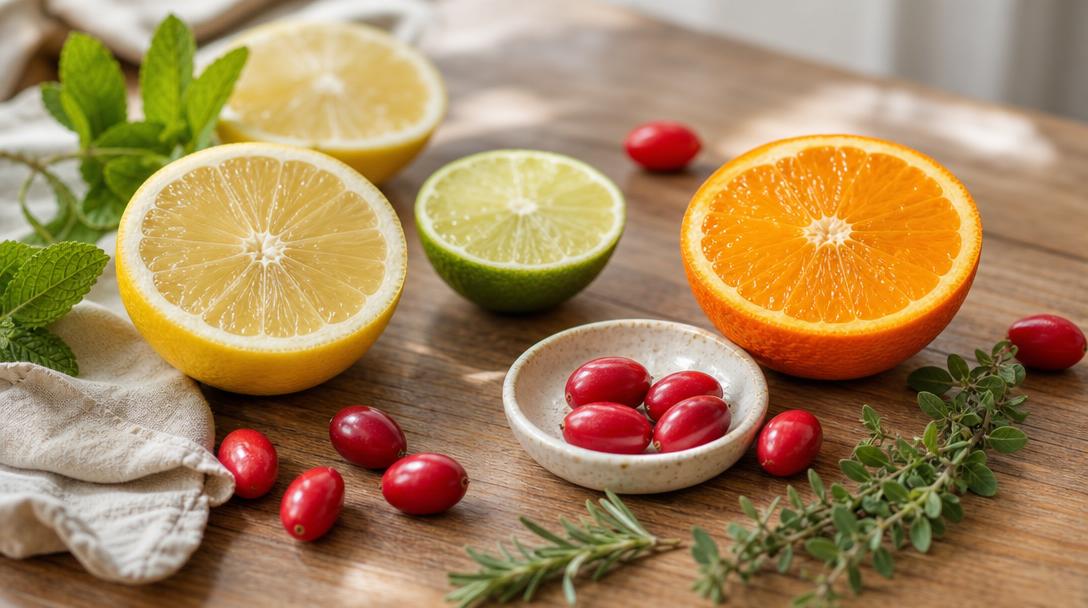
The way we experience flavor is far more malleable than most people realize. A squeeze of lemon is sour — that feels like a fixed fact. But a small group of remarkable plant-derived compounds can quietly reroute those sensory signals, turning tartness sweet, blunting bitterness, or amplifying flavors that would otherwise seem flat. These compounds are called natural taste modifiers, and they are attracting serious attention from food scientists, product developers, and health-conscious consumers alike. Understanding what they are and how each one works differently gives us a fascinating window into where food innovation may be heading.
What Are Natural Taste Modifiers?
Natural taste modifiers are bioactive compounds found in certain plants that interact with the taste receptors on your tongue to change how flavors are perceived — without adding significant calories or altering the actual chemical composition of the food you are eating. They do not season food the way salt or sugar does. Instead, they work upstream, at the receptor level, before the brain even processes the flavor signal.
This distinction matters. A sweetener like stevia adds sweetness by delivering a sweet-tasting molecule to your palate. A taste modifier like miraculin does something subtler and, arguably, more interesting: it temporarily changes the context in which your taste receptors respond. The food itself has not changed. Your perception of it has.
Several of these compounds have been known to indigenous communities for centuries. What is new is the growing scientific curiosity about how they function and how they might be applied in modern food and beverage development.
Miraculin: The Sour-to-Sweet Transformer
Miraculin is the glycoprotein found in the pulp of the miracle berry, a small bright-red fruit native to West Africa. What makes miraculin genuinely unusual among taste modifiers is its mechanism: it binds to sweet taste receptors on the tongue and stays there without activating them under neutral pH. When something acidic enters the mouth, however, that lower pH triggers the bound miraculin to activate those same sweet receptors — so sour foods like lemons, limes, or plain yogurt suddenly taste sweet.
The effect is temporary, lasting roughly 15 to 60 minutes depending on how thoroughly the pulp coats the tongue, and it fades naturally as saliva gradually washes the protein away. There are no reported adverse effects from casual consumption, and the compound itself is not absorbed into the bloodstream in any meaningful quantity — it simply works at the surface of the tongue.
Miraculin is available today in practical formats: miracle berry tablets made from freeze-dried fruit pulp, miracle berry powder for culinary and beverage applications, and dried miracle berry for those who prefer a whole-food format. These products make the taste-modifying experience accessible well beyond the tropical regions where the fresh fruit grows.
Thaumatin: Intense Sweetness from a West African Fruit
Thaumatin is a protein extracted from the katemfe fruit, another West African plant. Unlike miraculin, thaumatin is itself intensely sweet — estimated to be thousands of times sweeter than sucrose by weight — which means it functions more like an ultra-potent natural sweetener than a contextual modifier. It also carries a mild licorice-like aftertaste and has a notable ability to enhance and round out other flavors, which is why it appears in some flavor-masking and flavor-enhancement applications beyond pure sweetening.
Thaumatin has regulatory approval in several markets as a flavoring agent and sweetener. Food manufacturers use it at very low concentrations to suppress bitterness in products like coffee, cocoa, and certain pharmaceuticals, as well as to reduce the total sugar load in formulations. Its protein nature means it provides a small amount of calories, but at the concentrations used in practice, that contribution is negligible.
Gymnemic Acid: The Sweetness Blocker
If miraculin and thaumatin sit on one end of the spectrum — enhancing or redirecting sweet perception — gymnemic acid sits firmly on the other. Derived from the leaves of Gymnema sylvestre, a climbing plant used in traditional Ayurvedic practice, gymnemic acid temporarily blocks sweet taste receptors. After chewing a gymnema leaf or taking an extract, sweet foods lose their sweetness almost entirely. Sugar tastes like sand. Chocolate loses its appeal.
The effect, like miraculin's, is temporary and receptor-level. The food's actual sugar content has not changed; your ability to perceive that sweetness has been briefly switched off. Gymnema extract has attracted attention in wellness circles, though it is important to note that any discussion of its properties stays clearly in the territory of taste perception rather than metabolic or therapeutic outcomes.
For food innovators, gymnemic acid poses an interesting design challenge and opportunity: could it be used to recalibrate how people experience sweetness over time, or to create novel tasting experiences in a controlled culinary setting?
Other Compounds Worth Knowing
The world of natural taste modifiers extends further still. Curculin, found in the Malaysian fruit Curculigo latifolia, shares some functional similarities with miraculin — it both tastes sweet on its own and induces sweet sensations from water after consumption. Strogin and neoculin are related proteins under ongoing research. Cynarin, found in artichoke leaves, temporarily suppresses sweet receptors and makes water taste sweet afterward — a well-known phenomenon to anyone who has eaten artichoke and then taken a sip of water.
Each compound works through a distinct mechanism, binding to different receptor types or subunits, activating or blocking at different pH thresholds, and persisting for different durations. This mechanistic diversity is precisely what makes the category so rich for research.
What This Tells Us About the Future of Food
The growing interest in natural taste modifiers is not a coincidence. It reflects several converging pressures in the food industry: the push to reduce sugar and artificial additives, the demand for cleaner ingredient labels, and a broader cultural shift toward food that is both functional and experiential.
Traditional sugar reduction strategies — cutting sugar and replacing it with bulking agents or synthetic sweeteners — often sacrifice flavor quality in ways consumers notice and dislike. Taste modifiers offer a different path: instead of replacing what is in the food, they engage with how perception itself works. That is a fundamentally different design philosophy, and it opens up possibilities that caloric substitution alone cannot.
For consumers, this means a growing range of products that taste genuinely satisfying with less reliance on added sugar. For food developers, it means new tools for creating experiences that are memorable, functional, and aligned with what people increasingly want from what they eat. And for anyone curious about the science of flavor, natural taste modifiers are a reminder that the boundary between food and perception is far more interesting than it first appears.
Frequently Asked Questions
Q: Are natural taste modifiers safe to consume regularly? A: The compounds discussed here — miraculin, thaumatin, gymnemic acid, and related proteins — have long histories of traditional use and are generally considered safe for healthy adults at normal consumption levels. Miracle berry products like miracle berry tablets and miracle berry powder are widely used without reported issues. If you have specific dietary needs or health conditions, it is always sensible to check with a healthcare provider.
Q: How is miraculin different from a sweetener like stevia? A: Stevia delivers a sweet-tasting molecule that activates sweet receptors directly. Miraculin works differently — it binds to sweet receptors and only activates them in the presence of acid. It does not make plain water taste sweet, and it does not add sweetness to foods on its own. It specifically transforms sour or acidic flavors into sweet ones, which is a meaningfully different mechanism.
Q: Can miracle berry powder be used in food and drink formulations? A: Yes. Miracle berry powder is used in smoothies, flavored waters, culinary experiments, and product development applications where a natural sour-to-sweet flavor shift is desirable. It retains the miraculin protein in a shelf-stable, easy-to-use form, making it practical for both home use and small-batch food development.
Interested in miracle berry products, wholesale, or OEM cooperation? Contact Sen Yuh Farm to learn more.
Contact Sen Yuh Farm