Miracle Berry & Vinegar Foods: Surprising Flavor Transformations You Have to Try
Discover how miracle berry transforms vinegar-based foods like balsamic, kombucha, rice vinegar dressings, and pickles into something surprisingly sweet.
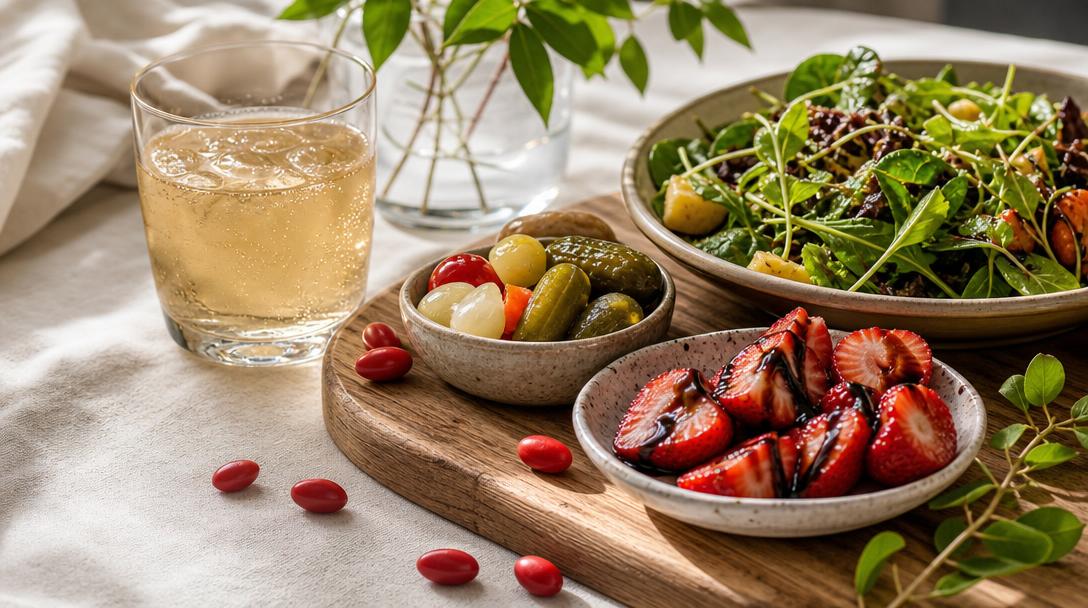
If you have ever done a miracle berry tasting session, you already know the magic: sour things go sweet, citrus tastes like candy, and your whole sense of flavor gets a playful reboot for about 20 to 30 minutes. Most people start with lemons and limes because the transformation is so dramatic it almost feels like a trick. But here is a category of foods that surprises even regular miracle berry fans — vinegar-based foods. From balsamic drizzled over strawberries to a cold glass of kombucha, vinegar foods react to miracle berry in ways that range from delightful to genuinely unexpected. This guide walks you through the why, the what, and the how.
Why Acid Is Acid — and Why Miracle Berry Responds to All of It
Miracle berry works through a glycoprotein called miraculin, which binds to sweet taste receptors on your tongue. In a neutral or alkaline environment it just sits there quietly. But when your mouth becomes acidic — when you eat something sour — the acidity causes miraculin to change shape and actively stimulate those sweet receptors. The result is a sweet sensation where your brain was expecting sourness.
Here is the key insight: miraculin does not care where the acid comes from. Citric acid from a lemon and acetic acid from apple cider vinegar are chemically different, but both lower the pH in your mouth and both trigger the same sweet-receptor mechanism. That means any food with meaningful acidity — including vinegar-based foods — will produce some degree of sweet transformation after you use miracle berry tablets or miracle berry powder.
The degree of sweetness you experience depends on how acidic the food is and what other flavors are competing for your attention. This is why different vinegar types respond differently, and why exploring them is genuinely fun.
Balsamic Vinegar on Strawberries: A Classic Made Extraordinary
Balsamic on strawberries is already a beloved combination in Italian cuisine. The vinegar adds depth and a slightly tart edge that balances the fruit's natural sweetness. With miracle berry active on your palate, the experience upgrades significantly. The balsamic's own mild sweetness gets amplified, and its characteristic tang softens into something almost like a berry reduction or a rich dessert syrup. The strawberries, which might be slightly underripe and tart, taste like they have been macerated in sugar overnight.
This is one of the most satisfying miracle berry vinegar food pairings because both elements — the fruit and the dressing — respond to miraculin simultaneously. Try a quality aged balsamic rather than a cheap imitation. The more complex the vinegar, the more nuanced the transformation.
Rice Vinegar Dressings and Asian-Inspired Salads
Rice vinegar is milder and less sharp than white distilled vinegar, with a subtle sweetness already built in. After miracle berry, that gentleness becomes even more pronounced. A simple Japanese-style dressing of rice vinegar, a touch of sesame oil, and soy sauce can taste almost like a sweet ponzu sauce without any added sugar. This makes miracle berry a genuinely interesting tool for anyone experimenting with lower-sugar versions of their favorite Asian-inspired salads.
Try a cucumber and seaweed salad dressed with rice vinegar after using miracle berry tablets. The refreshing crunch of the cucumber, the oceanic notes of the seaweed, and the now-sweetened dressing come together in a way that feels surprisingly light and indulgent at the same time. Rice vinegar also works well in slaws — a simple cabbage slaw dressed lightly becomes a standout side dish during a miracle berry tasting.
Kombucha: Fermented, Fizzy, and Transformed
Kombucha is one of the most popular miracle berry pairings in the vinegar-adjacent world, and for good reason. A plain or lightly flavored kombucha is tart, slightly funky, and mildly effervescent — not everyone's idea of a refreshing drink before they have acquired a taste for it. After miracle berry, an unflavored kombucha can taste remarkably like a fruit soda or a sparkling juice. The acetic acid and the fermentation-derived organic acids all trigger miraculin, and the natural trace sugars in kombucha suddenly feel much more prominent.
Flavored kombuchas — ginger, green tea, berry varieties — go through equally interesting transformations. The ginger bite softens, the tea becomes fruity, and any berry notes deepen into something almost juice-like. If you have friends who are kombucha-curious but find it too sour or vinegary to enjoy, a miracle berry tasting session with a few kombucha varieties is an excellent entry point.
Pickles and Pickled Vegetables: The Wild Card
Pickles are the wild card of miracle berry vinegar food pairing, and reactions vary quite a bit depending on the person and the pickle. A classic dill pickle — briny, acidic, and intensely savory — transforms in an unexpected direction. The sourness goes soft and the brine's saltiness and dill notes become more prominent, giving you something that tastes almost like a sweet-savory condiment. It is unusual, and not universally loved, but it is consistently surprising.
Pickled red onions, often used as a condiment on tacos or grain bowls, respond beautifully. The sharp vinegar bite disappears, and you are left with a mellow, almost jammy sweetness that still carries the onion's complexity. Pickled ginger — the kind served with sushi — becomes almost candy-like. If you enjoy exploring flavor contrasts, working through a small board of different pickled vegetables after miracle berry is a genuinely entertaining exercise.
Miracle berry powder works well for this kind of extended tasting session because it is easy to use in measured amounts and integrates naturally into a social food experience.
Tips for Building Your Vinegar Tasting Board
If you want to put together a structured miracle berry and vinegar foods tasting at home, a few practical notes will help. First, always use miracle berry tablets or miracle berry powder as directed — let the tablet dissolve slowly on your tongue, coating as much of the surface as possible, for the best effect. Second, start with more delicate vinegars like rice vinegar before moving to stronger ones like apple cider vinegar or straight balsamic. This prevents palate fatigue and lets you appreciate the nuance in each transformation.
Keep a small notebook or use your phone to jot down reactions. What tastes like fruit juice? What becomes dessert-like? What simply tastes less sour? The variations are genuinely interesting data if you enjoy understanding how flavor works. And if you are exploring lower-sugar eating habits, note which vinegar dressings or fermented drinks feel satisfying without any added sweetener — that is useful information for your everyday cooking.
Frequently Asked Questions
Q: Does the type of vinegar change how strong the miracle berry effect is? A: Yes, to some degree. Highly acidic vinegars like distilled white vinegar produce a stronger sweet response than milder ones like unseasoned rice vinegar, because the more acidic the environment, the more actively miraculin stimulates sweet receptors. However, other flavor compounds in the food also shape the overall experience, so stronger does not always mean more enjoyable.
Q: How long does the miracle berry effect last with vinegar-heavy foods? A: The effect typically lasts 20 to 45 minutes depending on the individual and how thoroughly the miracle berry was applied to the tongue. Eating multiple acidic foods back to back can seem to extend the experience since each sour item re-engages the miraculin that is still bound to your taste receptors.
Q: Can I use miracle berry powder the same way as miracle berry tablets for vinegar food pairing? A: Yes. Miracle berry powder can be mixed with a small amount of water to form a paste and applied to the tongue, or simply placed on the tongue directly. It works through the same mechanism as the tablets — just make sure it has good contact with your taste receptors for the best results before diving into your vinegar tasting board.
Interested in miracle berry products, wholesale, or OEM cooperation? Contact Sen Yuh Farm to learn more.
Contact Sen Yuh Farm